Monday, May 27, 2013

Audi r8 Top Speed excellent Price top hot information

,
Manufacturer quattro GmbH,
(a private subsidiary of Audi AG)
Parent company Volkswagen Group
Production 2006–present,
9,945 built in the end of 2008
Assembly Neckarsulm, Germany
Predecessor none
Successor none
Class Sports car
Body style(s) 2-door coupé (2007)
2-door convertible (2009)


Layout Longitudinal mid-engine,
quattro permanent four-wheel drive
Engine(s) 4.2 L FSI V8, 2xDOHC;
5.2 L FSI V10, 2xDOHC[3]
Transmission(s) 6-speed manual,
6-speed “R tronic” single-clutch semi-automatic
Wheelbase 2,649 mm (104.3 in)
Length 4,431 mm (174.4 in)
Width 1,904 mm (75.0 in)
Height 1,249 mm (49.2 in)
Kerb weight V8: 1,560 kg (3,439 lb),
V10: 1,620 kg (3,571 lb)
Fuel capacity 75 L (16.5 imp gal; 19.8 US gal)
Read more →

Saturday, May 25, 2013

Lamborghini Aventador J

,
The Lamborghini Aventador was like a balistic missile with its 700 bhp monstrous V12, all-time four wheel drive, and how can we forget those razor sharp looks? It seemed impossible to make it any sharper. But Lamborghini, being its typical self, has done it again.


They took the standard Aventador, chopped off the roof, gave it new bumpers, a great looking paint job, some modifications to aerodynamics, and created this mind blowing design. Its the one-off(read- super exclusive) Lambo Aventador J. It was so stunning, all the eyeballs were glued at it at the Geneva Motor show. It has been aptly named to refer to FIAs Appendix J which defines race car design.

They literally chop the roof actually. Hell they wouldnt even think of on a car, err, spaceship like this one. The roof acts as a very important support for the cars body shell. There are intricately designed support bars behind the seats to give extra support. Because of the missing roof and the smart use of lighter materials and redesigned components, there has been a lot of weight saving done.

 Its now lighter than the standard aventador. Hence, acceleration should be blazing fast and in fact its should be quicker than the standard aventador to 62mph, which does it in 2.9 seconds flat. Check it out and you gotta be mad to not want one.


Read more →

Kawasaki Ninja 250R

,

The Kawasaki Ninja 250R (previous generations had market-specific names) is a motorcycle originally introduced by Kawasaki in 1983. As the marques entry-level sport bike, the motorcycle has undergone few changes throughout its quarter-century lifetime, having received only two substantial redesigns. It has, for long, provided superbike thrills to the masses. Now though, bikes like the Honda CBR250R, Pulsar 200NS and the smaller of Yamahas R-series bikes have provided stiff competition to the once default choice of the segment that this Ninja was. But the latest version of the 250R has been updated comprehensively and features styling straight off from Kawasakis flagship, the ZX-10R. 


Since 2008, the bike is marketed as the Ninja 250R in all markets. It is also referred to by its platform designation, EX250, to which a generational suffix is attached. In the United States, previous models (EX250-E/F/G/H) were already being marketed as members of the Ninja family of sport bikes, while outside of the U.S. the bike was known variously as the ZZR-250, ZX-250, or as the GPX-250R. One of the earliest models, the EX250-C, was given the name GPZ-250.

Model history


The Ninja 250Rs particular ergonomics, chassis design, and engine placement have resulted in a motorcycle that straddles the standard and sport classes. The Ninjas riding posture also falls between standard and sport.

1983

The first generation was produced between 1983 and 1984, and known by the production number EX250-C. It was sold as the GPZ-250. Sold only in its home market of Japan, this earliest, belt-driven version was first produced in 1983, and shares no commonality with later generations. The bike has 35mm fork tubes.

1986

Produced between 1986 and 1987 was the EX250-E. This model was sold as the Ninja 250R in Canada and the U.S. between 1986 and 1987. It was known as the GPZ-250R elsewhere. When originally introduced, it was more costly than the Honda Rebel, and reviewers complained that while the 14,000 rpm redline was nice, the engine was slow to rev.

1987

Third Generation
Ninja250Side.jpg
Production1988–2007

Kawasaki GPX 250 Display, Model: 1993
For the 1988 model year, there were both cosmetic changes and changes in engine tuning. While the bore and stroke, and other major engine components, were unchanged, minor tuning adjustments were made. The carburetor diameters were reduced 2 mm to 30 mm (1.2 in), the cylinder compression ratio was increased from 12.0:1 to 12.4:1, ignition timing advance was increased, and the rear sprocket was increased by three teeth to 45. Reviewers reported that this made the engine more free-revving, reaching the high 14,000 redline more quickly, and the tested top speed increased by a few miles per hour. The new, more fully enclosed bodywork was complimented for being stylish, at the time, and easily mistaken for the larger Ninja 750.
The third generation of production of the Ninja 250 encompassed three models:
  • EX250-F - The most widespread EX250 variant, the E model was completely revamped and sold as the F model between 1988 and 2007 in the United States. Canada received the model between 1988 and 1999, and it was available elsewhere as the GPX-250R as early as 1987.
  • EX250-H - This model came to Canada as the Ninja 250R between 2000 and 2002, after which it received a new name: ZZR-250, in line with the -H models name elsewhere in the world, where it had existed since 1992. This motorcycle has parts in common with the -F model, though it shares the same engine, albeit with different casings. It sports a lateral aluminum frame, a different fairing (designed to make it look sportier), larger 17-inch wheels, an adjustable rear shock absorber, adjustable brake and clutch levers, a smaller drive sprocket, computer-controlled timing advance, and a revised electrical system. It also featured a smaller carburetor, & slightly different compression ratio, both of which were designed for quicker revving and slightly higher top end power. However, these upgrades came at a 6kg weight gain.EX250-G - Sold only in its home market of Japan, this version was known as the GPX-250R-II. It featured dual front brakes and a wider wheel and tire (110/80-16). All other parts were identical to the -F model. It was sold after 1988.

2008

Fourth Generation
2009 Kawasaki Ninja 250R EX250-J 05.JPG
ManufacturerKawasaki
Also calledEX250-J
Production2008 - 2012
PredecessorEX250-F
ClassSport bike
Engine249 cc (15.2 cu in), Parallel twin,four-stroke, Liquid Cooled, DOHC.
Bore / Stroke62.0 × 41.2 mm (2.44 × 1.62 in)
Ignition typeTCBI with digital advance
TransmissionSix-speed
TiresFront: 110/70-17M/C
Rear: 130/70-17M/C
Rake, Trail26°
Wheelbase1,399.5 mm (55.10 in)
DimensionsW 713.7 mm (28.10 in)
H 1,109.9 mm (43.70 in)
Seat height774.7 mm (30.50 in)
Weight170 kg (375 lb) (dry)
In 2008, Kawasaki gave the EX250 its first big makeover after many years. The EX250-J model is known as the Ninja 250R worldwide, regardless of market.
Parts from the third generation are still found on the -J, but its redesigned exterior panels bring the Ninjas appearance out of the 1990s and into line with late-2000s sportbikes. The engine and drivetrain retain 30% of the -F models parts, according to Kawasaki. The engines compression and maximum torque have been lowered to provide better midrange performance. The redesign of the engine resulted in improvements in engine response at low engine speeds, and making the bike smoother and "much easier to ride."
Though the previous generation Ninja 250 had a peak power advantage of 1 to 5 hp (0.75 to 3.7 kW), the new versions 20 or 30 percent increase in mid-range power allows the bike to pull from 3,000 rpm where previously it had to be revved to 4,000 rpm. The U.S. -J model uses dual carburetors like the -F model, but the European, Brazilian and Thai models have fuel injection. The wheels were increased in size to 17 inches, the front suspension was improved, and the brake rotors were replaced with a larger petal shape. On the carbureted version, a fuel gauge was added in place of the temperature gauge. With the additional and redesigned equipment, the EX250-J suffered a 10 kg (22 lb) increase in wet weight over its predecessors.
With the arrival of the EX250-J, manufacturing continues to be located in Thailand.

2013

Kawasaki has announced that the 2013 model year Ninja 250R will have new bodywork, twin headlights, a digital instruments cluster, new wheels with a wider 140 mm (5.5 in) rear tire, and a reworked engine and exhaust. ABS will be available as an option. The engine will continue to be fuel injected in some markets and carbureted in others.
Read more →

Friday, May 24, 2013

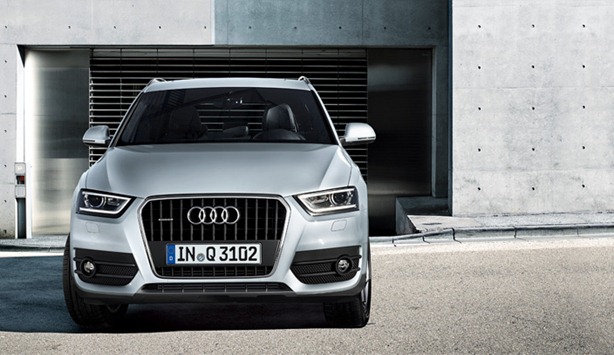
Audi to hike the price of Q3

,

Audi will hike the price of Q3 to 1-2 percentage.Which means between RS 26,000-63,000.Audi offers two variants of Q3 in India.Audi Q3 1.0 TDI base and Audi Q3 TSI high.Because of depreciation of RS in the recent months forced Audi to hike the price of Q3.Now the Base version cost around 26 lakhs and the top end version 31 lakhs.Top end version price will be increased more.So after the hike it will be around 32 lakhs.Audi Q3 is the entry level model.Q3 has given lots of volume for Audi.This give Audi to took the 2nd place in the luxury market.Audi has sold more than 1000 Q3 till now from the launch.Audi Q3 biggest rival was BMW X1.Audi is confident that they will get the targeted sale of 8000 units before 2012.Audi Q3 will help to get that volume.Audi is also expanding its dealer network in India.Audi has 21 dealerships in India.Audi want to increase it to 25 before the end of 2012.

audi q3

Read more →

American Hot Rods

,

Theyre low, theyre fast, theyre classics- theyre the Hot Rods. The American way of being free, one of the fastest ways to say your cool, when your in the drivers seat in a Hot Rod, a huge V8 engine in front of you with all its massive dollops of horsepower under the control of your right foot, you know your going to thoroughly enjoy what happens next. Open top or hard top, engine enclosed in a beautiful hood or open and out there for the whole world to admire, matte finish or classic flames, they come in various kinds. Built to leave all other cars in its smoke in a straight line, theyre engines are taken to the end of theyre lives developing horse power more than double then what they originally produced. They are the choppers of the Driving world.

Check out the Hot Rod urban slang here.


Hot rods are typically American cars with large engines modified for linear speed. The origin of the term "hot rod" is unclear. One explanation is that the term is a contraction of "hot roadster," meaning a roadster that was modified for speed. Another possible origin includes modifications to or replacement of the camshaft(s), sometimes known as a "stick" or "rod". A camshaft designed to produce more power is sometimes called a "hot stick" or a "hot rod". Roadsters were the cars of choice because they were light. The term became commonplace in the 1930s or 1940s as the name of a car that had been "hopped up" by modifying the engine in various ways to achieve higher performance.


In modern culture

Lifestyle


There is a contemporary movement of traditional hot rod builders, car clubs and artists who have returned to the roots of hot rodding as a lifestyle. This includes new breed of traditional hot rod builders, artists and styles, as well as classic style car clubs. Events like GreaseOrama feature traditional hot rods and the greaser lifestyle. Underground magazines like Ol Skool Rodz, Gears and Gals, and Rat-Rods and Rust Queens cover events and people.

History

Late 1930s–1950s

The term seems first to have appeared in the late 1930s in southern California, where people would race their modified cars on the vast, empty dry lake beds northeast of Los Angeles under the rules of the Southern California Timing Association(SCTA). The activity increased in popularity after World War II, particularly in California because many returning soldiers had been given technical training in the service. Many were prepared by Bootleggers in response to Prohibition to enable them to avoid revenue agents ("Revenooers"); some police vehicles were also modified in response.
The first hot rods were old cars (most often Fords, typically Model Ts, 1928–31 Model As, or 1932-34 Model Bs), modified to reduce weight. Typical modifications were removal of convertible tops, hoods, bumpers, windshields, and/or fenders; channeling the body; and modifying the engine by tuning and/or replacing with a more powerful type. Speedster was a common name for the modified car. Wheels and tires were changed for improved traction and handling. "Hot rod" was sometimes a term used in the 1950s as a derogatory term for any car that did not fit into the mainstream. Hot rodders modifications were considered to improve the appearance as well, leading to show cars in the 1960s replicating these same modifications along with a distinctive paint job.
Engine swaps often involved fitting the Ford flathead engine, or "flatty", in a different chassis; the "60 horse" in a Jeep was a popular choice in the 40s. After the appearance of the 255 cu in (4.2 l) V8, because of interchangeability, installing the longer-stroke Mercury crank in the 239 was a popular upgrade among hot rodders, much as the 400 cu in (6.6 l) crank insmall-blocks would become. In fact, in the 1950s, the flathead block was often fitted with crankshafts of up to 4.125 in (104.8 mm) stroke, sometimes more. In addition, rodders in the 1950s routinely bored them out by 0.1875 in (4.76 mm) (to 3.375 in (85.7 mm); due to the tendency of blocks to crack as a result of overheating, a perennial problem, this is no longer recommended. In the 50s and 60s, the flatty was supplanted by the early hemi. By the 1970s, the small-block Chevy was the most common option, and since the 80s, the 350 cu in (5.7 l) Chevy has been almost ubiquitous.

Post WWII origins of organized rodding


Ford Popular

Rodded prewar British Rover 10
After World War II there were many small military airports throughout the country that were either abandoned or very rarely used that allowed hot rodders across the country to race on marked courses. Originally drag racing had tracks as long as one mile (1.6 km) or more, and included up to four lanes of racing at the same time. As hot rodding became more popular in the 1950s, magazines and associations catering to hot rodders were started. As some hot rodders also raced on the street, a need arose for an organization to promote safety. Hot rodders including Wally Parks created the National Hot Rod Association (NHRA) to bring racing off the streets and onto the tracks. They created rules based on safety and entertainment, and allowed Hot Rodders of any caliber the ability to race. The annual California Hot Rod Reunion and National Hot Rod Reunion are held to honor pioneers in the sport. The Wally Parks NHRA Motorsports Museum houses the roots of hot rodding.

1960s rise of the street rod

As automobiles offered from the major automakers began increasing performance, the lure of Hot Rods began to wane. It was no longer necessary to put a Cadillac engine in a Ford roadster to be fast. It was now possible to buy a muscle car that outperformed just about any hot rod, with more passenger room, and without having to expend the effort of building and tuning the car oneself. After the 1973 Oil Crisis, the public called on automakers to offer safety and fuel efficiency over performance. The resulting decrease in an average cars performance led to a resurgence of Hot Rodding, although the focus was on driving Hot Rods over racing so the term Street Rod was coined to denote a vehicle manufactured prior to 1949, often with a more reliable late model drivetrain. Street Rodding as it was now known was a different phenomenon than Hot Rodding, as Street Rodding was mainly family oriented. National events were hosted by the National Street Rod Association(NSRA), which also stressed safety as the NHRA did 20 years before, but this was safety for the street as opposed to on the race track. Each NSRA event has a Safety Inspection Team that performs a 23 points inspection process that goes beyond what normal State Safety Inspections Require.
In the mid-1980s, as stock engine sizes fell, rodders discovered the all-aluminum 215 (Buick or Olds) could be stretched to as much as 305 cu in (5 l), using the Buick 300 crank, new cylinder sleeves, and an assortment of non-GM parts, including VW & Mopar lifters and Carter carb. It could also be fitted with high-compression cylinder heads from the Morgan +8. Using the 5 liter Rover block and crank, a maximum displacement of 317.8 cu in (5,208 cc) is theoretically possible.

Modern rodding


1936 Chevrolet street rod
There is still a vibrant hot rod culture worldwide, especially in Canada, the United States, the United Kingdom, Australia and Sweden. The hot rod community has now been subdivided into two main groups: street rodders and hot rodders. Hot rodders build their cars using a lot of original equipment parts, whether from wrecking yards or NOS (New Old Stock), and follow the styles that were popular from the 1940s through the 1960s. Street rodders build cars (or have them built for them) using primarily new parts.
A common factor among current owners of hot rods is to make them more noticeable. There are now many different sectors of hot rodding, some of which are:
  • Street rod: a very popular branch of hot rodding. Contrary to the implications of the term hot rod, street rods are a mix of hot rods, custom cars, and modern Detroit cars. Emphasis is on high-quality custom paint jobs, comfortable interiors, and modern engines and running gear. As specified by the NSRA (National Street Rod Association), a street rod must have been manufactured prior to 1949.
  • Pro-Street rod: a branch of street rodding featuring mildly customized sedan and coupe models not normally associated with hot rodding that have monster engines and huge rear tires inside the fender wells. They retain all the other luxury features of street rods.
  • Billet rod: street rods featuring many items being machined from billet aluminum
  • Traditional rod: built according to a particular point in time and stick to those build techniques and materials
  • Rat rod: constructed to resemble an old time jalopies, although they may require more work than a show rod
  • Show rods (created to compete in national car shows such as Americas Most Beautiful Roadster (AMBR), and the Detroit Autorama).


There are hundreds of local car clubs supporting the hot rod/street rod community. The National Street Rod Association (NSRA) is the largest club in the world and sponsors many local events including the Street Rod Nationals which serve as a showplaces for the majority of the hot-rodding and street-rodding world to display their cars and to find nearly any part needed to complete them. Collectively they are all referred to as Hot Rods.


Read more →